
Dimensão 3D
Coordenação e Simulação 3D
BIM
WHAT IS IT?
BIM (Building Information Modeling) is an integrated process that stores and streamlines the exchange of design, construction and operational information between the various stakeholders, creating three-dimensional models that represent all the physical and functional characteristics of a building and have significant potential to support decision-making throughout the various stages of a project.
Integrating BIM into a company's processes requires the strategic definition of objectives and rigorous planning and control of its implementation.
BIM, or Building Information Modeling (Building Information Modelling), is a methodology that revolutionises how construction projects are designed, built and maintained throughout their life cycle. It is a collaborative, data-driven approach to construction project management, involving the creation and use of intelligent digital models.
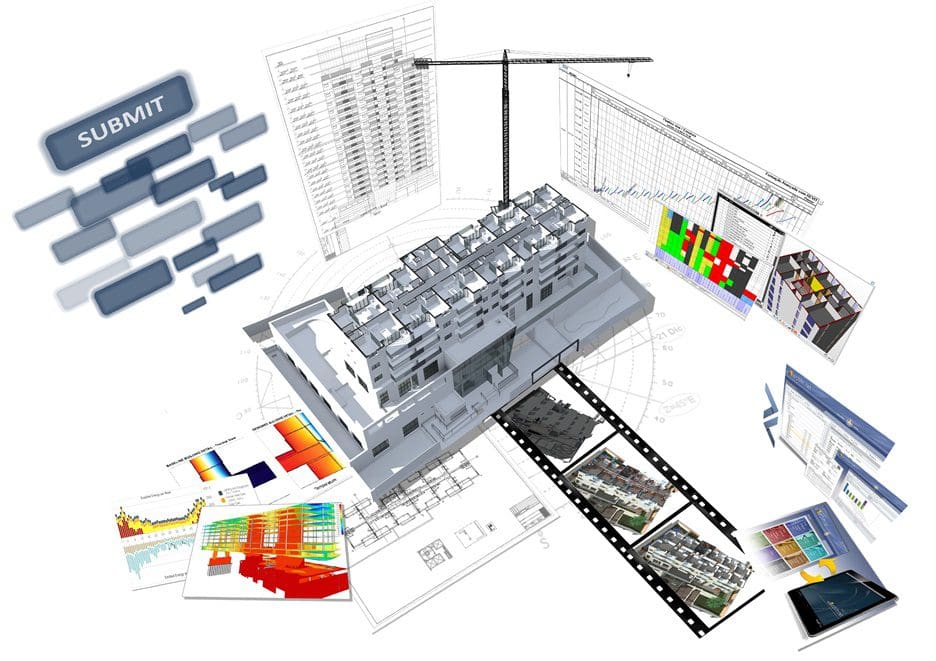
BIM enables the creation of a virtual three-dimensional model that incorporates detailed information about the physical and functional components of a building, such as walls, floors, ducts and electrical systems, among others. In addition, the BIM model stores further information, such as material properties, specifications, costs, schedules and technical documentation.
Coordenação e Simulação 3D
Planeamento e Controlo
Quantidades e Orçamento
Gestão e Manutenção
One of the main benefits of using BIM is the ability to visualise the project in 3D, which facilitates understanding and communication between all parties involved, from architects and engineers to contractors and clients. In addition, BIM enables the early detection of design issues, such as clashes between different systems, reducing rework and delays during construction.
Another major benefit of BIM is the ability to carry out advanced simulations and analyses, such as energy analyses, airflow simulations, structural calculations and much more. These analyses support informed decision-making, enabling design optimisation and improving building performance in terms of energy efficiency, sustainability and comfort.
In addition, BIM offers significant benefits throughout the project life cycle. During the construction phase, BIM can be used for logistics planning, improving efficiency and reducing costs. During the operation and maintenance phase, BIM provides an information-rich database for building management, facilitating maintenance, performance monitoring and even decisions on refurbishment or renovation.
In summary, BIM is an innovative approach to construction project management that offers a holistic and integrated view of the project. With its advanced modelling, collaboration and analysis capabilities, BIM delivers significant improvements in the efficiency, quality and sustainability of construction projects.
As a company dedicated to BIM, ndBIM has expertise in this methodology and offers a wide range of related services, from BIM project creation and modelling to consultancy and training. Our highly qualified team is ready to help you use BIM efficiently and effectively in your projects, ensuring high-quality results and success in construction and project management.